



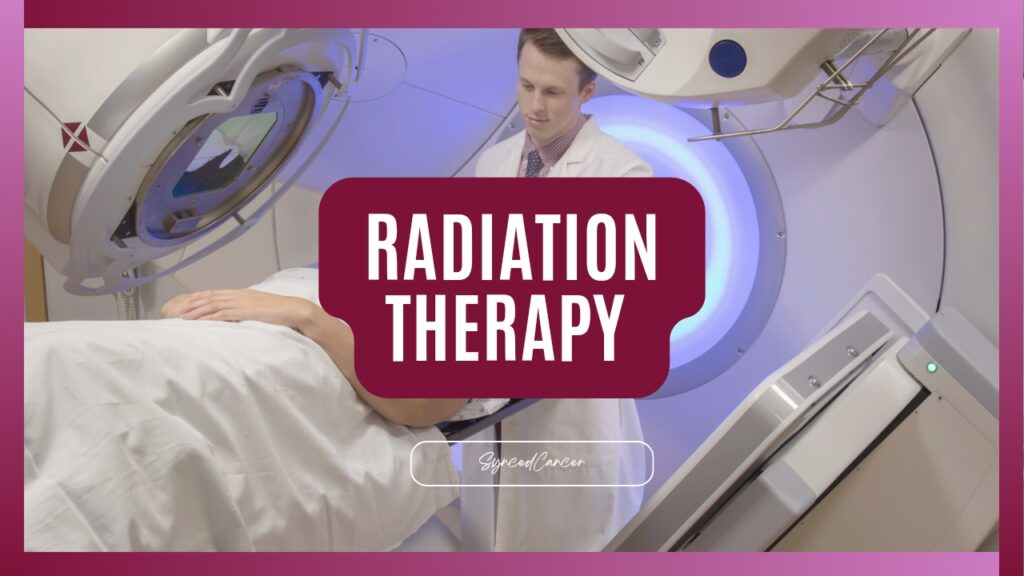
Radiation Therapy
Radiation therapy, also known as radiotherapy, is a fundamental treatment modality for various types of cancer. It employs high doses of radiation to kill cancer cells or shrink tumors by damaging their DNA. Radiation therapy can be given inside or outside of your body. This treatment is meticulously planned and executed to maximize its effectiveness while minimizing its impact on surrounding healthy tissues. This essay provides a comprehensive overview of radiation therapy, including its principles, types, procedures, benefits, side effects, and considerations for patients undergoing treatment.
Principles of Radiation Therapy
Radiation therapy works on the principle of using high-energy particles or waves, such as X-rays, gamma rays, electron beams, or protons, to target and destroy cancer cells. The primary goal is to damage the DNA within cancer cells, which inhibits their ability to reproduce and grow. Over time, the damaged cancer cells die and are naturally eliminated by the body.
Cancer cells are generally more susceptible to the effects of radiation because they divide more rapidly than most normal cells. However, normal cells can also be affected by radiation, which is why treatments are carefully planned to minimize exposure to healthy tissues.